


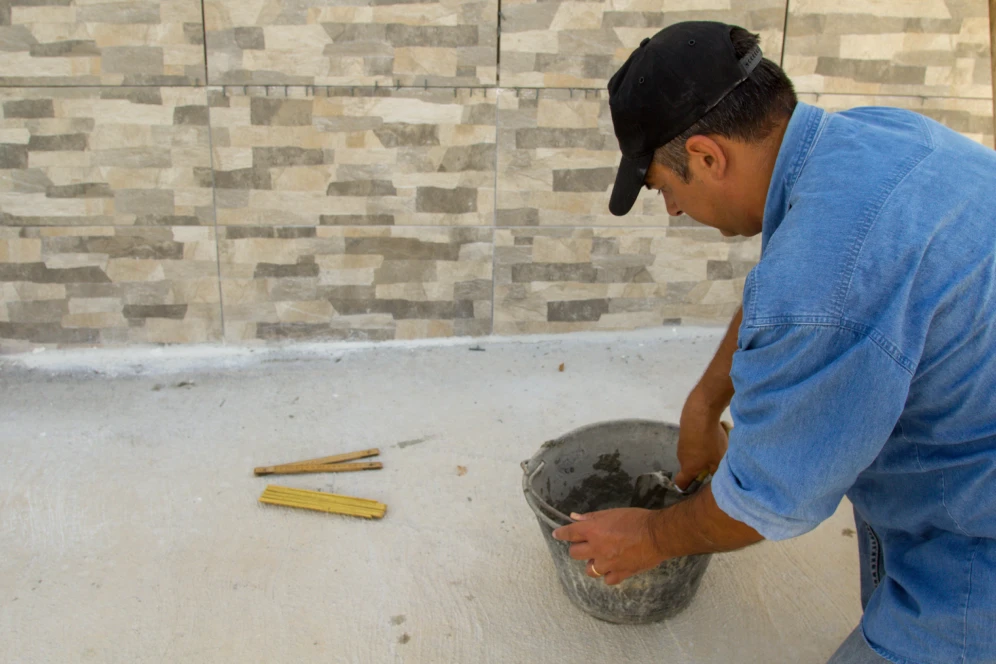
There is a specific sound that every homeowner and contractor dreads. It is that hollow, echoing thud when you tap on a floor tile. That sound means one thing: the bond has failed, and sooner or later, that tile is going to crack.
For decades, Indian construction relied on the traditional “sand-cement” mortar method. While this worked for small, porous ceramic tiles, it is a recipe for disaster with modern, large-format vitrified tiles especially when laying them over cured concrete.
If you are renovating or building today, you need to move beyond cement. You need a specialized floor tile adhesive. In this article, we explore why adhesion technology has changed and help you identify the best floor tile adhesive for concrete floors in the Indian market.
Why Cement Mortar Fails on Concrete Floors
To understand why we need adhesive, we must first look at the surface.
Concrete floors are dense and rigid. When you pour a traditional sand-cement slurry over a concrete slab, it relies on “mechanical interlocking” (the grit gripping the surface). However, modern concrete is often smooth, and modern tiles (like Vitrified or GVT) are non-porous. They don’t absorb water, so the cement cannot “grip” them.
This leads to three common failures:
- De-bonding: The tile pops loose within a year.
- Hollow Sounds: Air pockets form as the water evaporates from the thick cement layer.
- Cracking: Concrete expands and contracts with heat. Rigid cement mortar doesn’t flex, causing the tile to snap.
This is why a polymer-modified floor tile adhesive is non-negotiable for modern construction.
Defining the Best Floor Tile Adhesive for Concrete Floors
So, what makes an adhesive “the best” for this specific application? It comes down to chemistry.
The best floor tile adhesive for concrete floors is not just cement; it is a blend of Portland cement, fine graded sand, andmost importantlyPolymers (Latex or Acrylic).
These polymers provide two critical superpowers:
- Chemical Bonding: They stick to the smooth concrete surface chemically, not just mechanically.
- Flexibility: They allow for “thermal expansion.” When the concrete slab expands in the Indian summer heat, the adhesive stretches slightly instead of transferring that stress to the tile.
Analysis: Types of Tile Adhesives
Not all bags of glue are the same. According to Indian Standards, floor tile adhesive is categorized by its strength. Choosing the wrong one is a waste of money.
Type 1: General Purpose
- Best For: Porous ceramic tiles on regular floors.
- Verdict: Good for bathrooms, but not the best floor tile adhesive for concrete floors if you are using large vitrified tiles.
Type 2: High Polymer Modified
- Best For: Vitrified tiles on concrete.
- Verdict: This is the standard requirement for most Indian homes. It has high grab and water retention, preventing the tile from slipping.
Type 3 & 4: Large Format & Exterior
- Best For: Huge slabs, granite, or exterior tiles.
- Verdict: If you are tiling a balcony or using massive Italian marble slabs on concrete, you need Type 3. It offers extreme flexibility (S1/S2 deformation), allowing the floor to withstand heavy foot traffic and vibration.
Top Brands vs. Industrial Formulations
When you walk into a hardware shop, you will see the retail giants:
- Roff (Pidilite): The market leader with products like Roff MCA.
- MYK Laticrete: Known for global standard adhesives like Laticrete 290.
- Saint-Gobain Weber: Excellent for technical and commercial projects.
However, for large projects (housing societies, malls), buying retail bags is expensive. This is where B2B manufacturers like The Glue Company step in. We provide industrial-grade floor tile adhesive formulations that match Type 2 and Type 3 standards but are supplied in bulk. This ensures consistency for the builder and significantly reduces the per-square-foot cost.
Application Technique: The “Notched Trowel” Secret
Even the best floor tile adhesive for concrete floors will fail if applied incorrectly. The biggest mistake we see in India is “spot bonding” (putting blobs of glue on the corners).
The Correct Method: You must use a Notched Trowel. This tool creates ridges in the adhesive.
- Spread the adhesive on the concrete.
- Comb it with the trowel to create lines (ribs).
- Press the tile down and twist slightly.
- The ridges collapse, creating 100% coverage under the tile. No air pockets = No cracking.
Conclusion
Flooring is a one-time investment. You can change your wall paint in two years, but you cannot easily rip up a floor.
The shift from cement to floor tile adhesive is not a marketing gimmick; it is a technical necessity for modern vitrified tiles and concrete substrates. By choosing a polymer-modified adhesive (Type 2 or higher), you ensure that your floor remains solid, silent, and crack-free for decades.
Whether you choose a retail brand like Laticrete or an industrial partner like The Glue Company, ensure the spec sheet matches your tile size.