


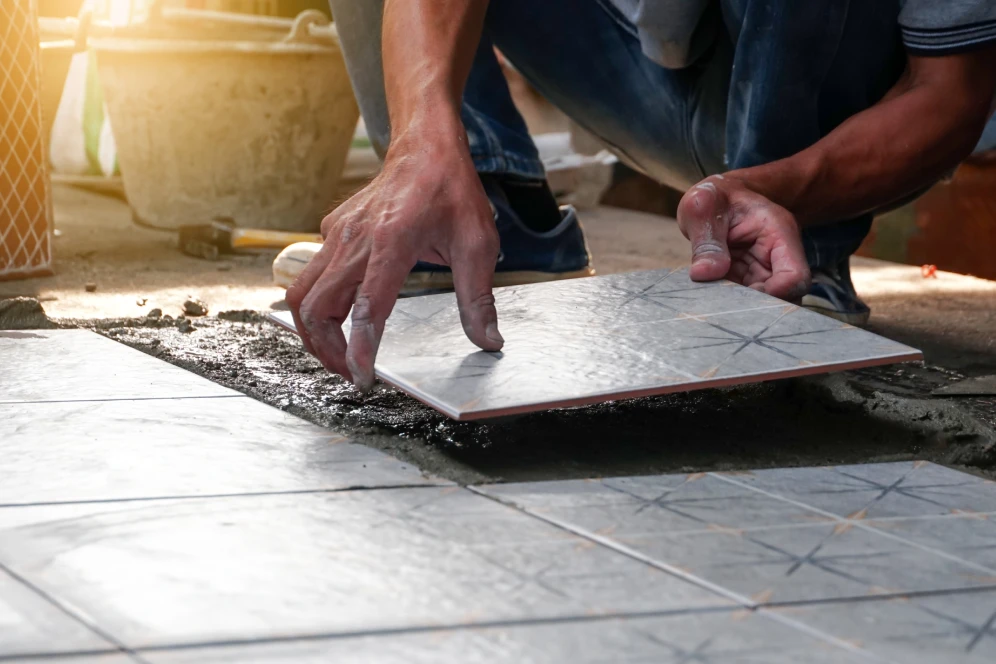
There is a specific sound that every homeowner, architect, and site engineer dreads. It is that hollow, echoing thud when you tap on a floor tile. That sound is the heartbeat of a failing floor. It means the bond has died, air pockets have moved in, and it is only a matter of time before that expensive vitrified tile or Italian marble slab cracks under pressure.
For decades, the Indian construction sector relied on the traditional “sand-cement slurry” method. While it worked for the small, porous ceramic tiles of the 1990s, it is a recipe for disaster with today’s dense, non-porous tiles and high-performance concrete slabs. To build a floor that lasts decades, you must look at what the top adhesive companies in India are doingmoving away from raw cement and toward specialized tile fixing chemicals.
In this guide, we explore the science of modern bonding and help you navigate the landscape of adhesive brands in India to find the right solution for your project.
Why Traditional Cement Fails on Concrete Floors
To understand why we need advanced adhesives, we have to look at the chemistry of the surface. Modern concrete floors are dense and non-porous. When you pour a thick bed of traditional sand-cement over a cured concrete slab, it relies entirely on “mechanical interlocking”essentially, the cement tries to “grab” onto the microscopic pores of the surface.
However, modern vitrified tiles (GVT) are engineered to be nearly waterproof. They don’t absorb water, which means the cement cannot “root” itself into the tile. This mismatch leads to three common failures:
- De-bonding: The tile simply pops loose within 12 to 18 months.
- Hollow Sounds: As water evaporates from a thick cement bed, air pockets form. These voids are where cracks begin.
- Thermal Stress: Concrete expands and contracts with the Indian heat. Rigid cement mortar doesn’t flex, causing the tile to snap under the tension.
This is why leading adhesive manufacturing companies in India have developed polymer-modified adhesives that create a chemical bond rather than just a physical one.
Navigating the Market: Adhesive Brands in India
When searching for the best floor tile adhesive for concrete floors, you will encounter a mix of retail household names and industrial powerhouses.
The Retail Leaders
If you walk into a local hardware store, you’ll likely see the names that make up the top 10 adhesive companies in India:
- Roff (Pidilite): The most recognized name in the Indian retail tile adhesive market.
- MYK Laticrete: A pioneer known for bringing global standards to Indian job sites.
- Saint-Gobain Weber: A leader in high-tech mortars for large-scale commercial projects.
The Industrial Experts
For large-scale infrastructuremalls, airports, and luxury townshipsbuying individual retail bags is often inefficient. This is where adhesive manufacturing companies in India, like Glue Company (formerly Aditya Polymers), provide the most value. By providing DCS-controlled industrial formulations directly to builders, these companies ensure consistency across 100,000+ square feet while optimizing the cost-to-performance ratio.
Defining the “Best” Floor Tile Adhesive
So, what makes an adhesive “the best”? It comes down to the inclusion of Redispersible Polymer Powders (RPP). These polymers give the adhesive two critical “superpowers”:
- Chemical Adhesion: They create a “suction” bond that grips smooth concrete.
- Flexibility (Deformability): They act as a shock absorber, allowing the floor to “breathe” during the hot summers and monsoon changes without cracking the tiles.
Application Technique: The “Notched Trowel” Secret
Even the highest-rated product from the top adhesive companies in India will fail if the application is wrong. The biggest mistake on Indian sites is “Spot Bonding”putting four or five blobs of adhesive on the corners of a tile. This leaves the center hollow and the corners over-stressed.
The Professional Method:
- Comb the Adhesive: Use a notched trowel to create uniform ridges (ribs) on the concrete.
- Back-Buttering: For large tiles, apply a thin layer of adhesive to the back of the tile itself.
- Press and Twist: Lay the tile and give it a slight “vibrate” or twist. This collapses the ridges, ensuring 100% coverage.
Conclusion
Flooring is a one-time investment. You can change your wall paint in a weekend, but ripping up a cracked floor is a logistical and financial nightmare. The shift toward specialized floor tile adhesives is not a marketing gimmick; it is a technical necessity for modern vitrified tiles and concrete substrates.
Whether you are choosing from the top 10 adhesive companies in India for a residential flat or partnering with a specialized adhesive manufacturing company in India for a commercial project, always prioritize high-polymer content.
Frequently Asked Questions
1. Can I use ordinary cement for vitrified tiles?
No. Vitrified tiles have very low water absorption. Ordinary cement cannot “grip” the tile effectively, leading to de-bonding and hollow sounds within a short period.
2. What is the difference between Type 1 and Type 2 tile adhesive?
Type 1 is generally for ceramic tiles on internal walls/floors. Type 2 is a polymer-modified adhesive specifically designed for vitrified tiles on concrete floors and external applications.
3. How long does tile adhesive take to dry?
Most standard adhesives reach “initial set” in 24 hours. However, full curing and traffic-readiness usually take 48 to 72 hours, depending on the Indian climate and humidity.
4. Why is my tile adhesive cracking?
Cracking usually happens because of “spot bonding” (air pockets), using a low-quality adhesive with zero polymers, or laying tiles on “green” concrete that hasn’t finished shrinking.
5. Who are the top adhesive companies in India for bulk projects?
While Roff and Laticrete are great for retail, companies like Glue Company specialize in industrial-scale manufacturing and custom formulations for large-scale real estate and infrastructure projects.