


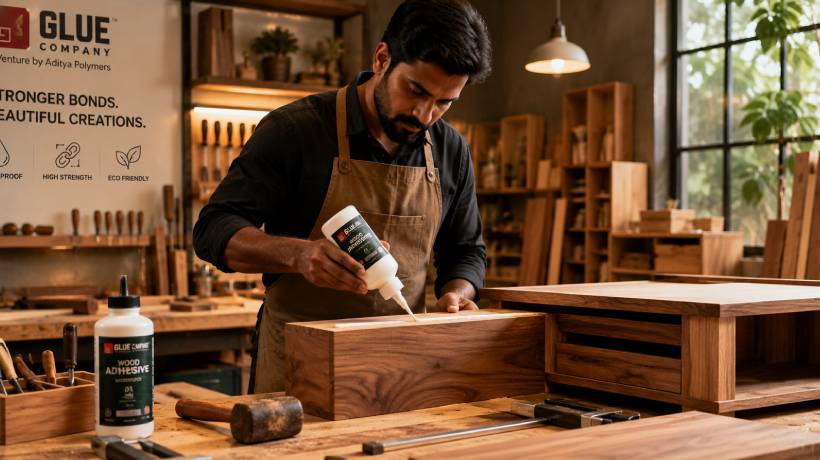
How to Choose the Best Adhesive for Wood for Every Project
There is something deeply grounding about working with wood. Whether you are a professional furniture manufacturer in a bustling Pune factory, a boutique carpenter, or a DIY enthusiast spending your Sunday in a home workshop, you know the feeling. It’s the smell of fresh sawdust, the texture of the grain under your palm, and that incredible satisfaction when two pieces of timber fit together perfectly.
But as any veteran woodworker will tell you, the beauty of the joint is only half the story. The real strength of the soul of the piece lies in the bond. We have all experienced that heartbreaking moment: a chair leg that wobbles after a year, or a beautiful outdoor table that begins to warp and pull apart after its first monsoon. Usually, the culprit isn’t the wood; it’s the choice of glue.
In 2026, the market is flooded with options. From traditional white glues to high-tech polymers, finding the best adhesive for wood can feel like a daunting task. At Glue Company, we have spent over twenty years (building on our legacy as Aditya Polymers) refining the chemistry of wood bonding. We believe that choosing an adhesive shouldn’t just be a technical checkbox, it should be an informed decision that ensures your hard work lasts for generations.
Understanding the "Why" Before the "What"
Before we dive into the specific products, we need to talk about why wood is so tricky to stick together. Wood is a “living” material. Even after it is cut and dried, it breathes. It expands when the humidity is high and contracts when the air is dry.
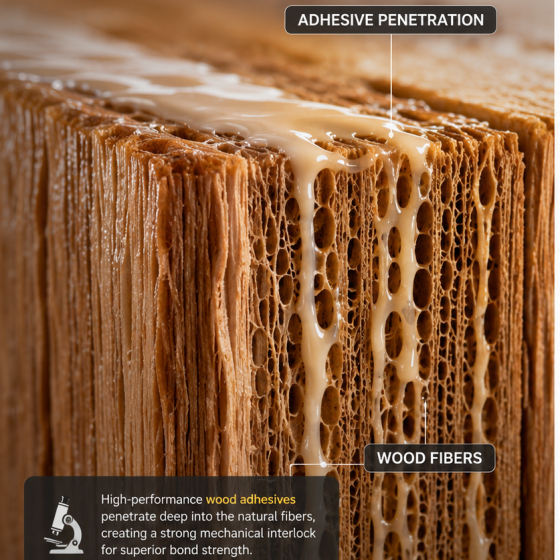
If you use a glue that is too rigid, it will crack when the wood moves. If you use one that is too weak, the internal tension of the wood will simply pull the joint apart. The best adhesive for wood is one that penetrates deep into the fibers, creating a mechanical “interlock” that becomes part of the wood itself.
The Role of Porosity
Wood is essentially a series of microscopic straws (fibers). A great adhesive needs to travel down these straws. This is why surface preparation is so important. At Glue Company, we always tell our partners: “The glue is only as good as the surface it touches.” If your wood is covered in dust or oil, even the most expensive waterproof adhesive for wood will fail.
The Contenders: Which Glue Wins in 2026?
In today’s industrial and domestic landscape, three main types of adhesives dominate the woodworking scene. Let’s break down which one fits your specific needs.
A. Polyvinyl Acetate (PVA) – The Reliable All-Rounder
Most “white” and “yellow” glues are PVAs. They are the best adhesive for wood for general indoor furniture, cabinetry, and assembly.
- Why it’s loved: It’s non-toxic, easy to clean up with water, and creates a bond that is actually stronger than the wood itself.
- The Glue Company Edge: Our G-Wood Standard series is a modified PVA that offers a faster “tack” time, meaning you can spend less time clamping and more time creating.
B. Polyurethane Adhesives – The Heavy-Duty Choice
If you are bonding wood to non-porous materials like metal, plastic, or stone, polyurethane is your best friend. It requires moisture to cure, which leads us to our next big keyword.
C. The Waterproof Specialist
When your project is destined for the outdoors, think garden benches, pergolas, or exterior doors you cannot compromise. You specifically need a waterproof adhesive for wood. These are usually classified by “D” ratings (D3 or D4).
- D3: Water-resistant (suitable for damp indoor areas like kitchens).
- D4: Fully waterproof (suitable for constant outdoor exposure)
The Monsoon Challenge: Finding a Waterproof Adhesive for Wood
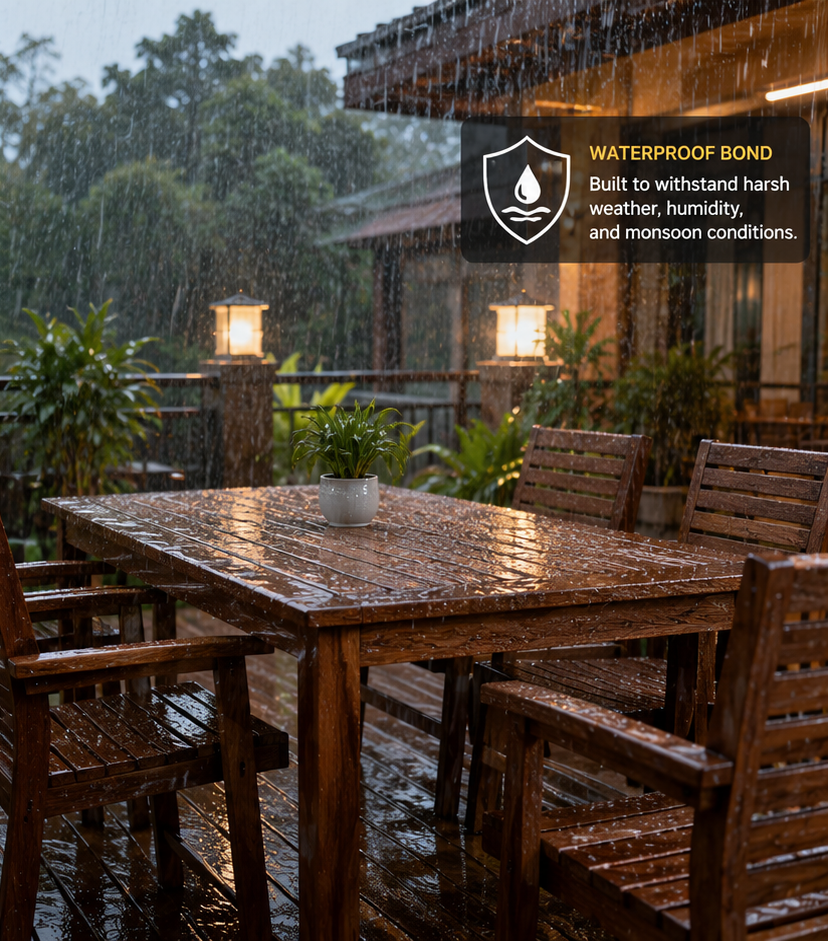
For our fellow manufacturers and creators in India, the monsoon isn’t just a season; it’s a rigorous stress test for furniture. High humidity can cause standard glues to soften or “creep,” leading to joint failure.
Finding a truly waterproof adhesive for wood is about looking for a D4-rated cross-linking agent. At Glue Company, our G-Wood AquaBlock is engineered specifically for the Indian climate. It doesn’t just sit on the surface; it chemically cross-links within the wood fibers, creating a bond that is impervious to boiling water, steam, and the relentless humidity of the coastal belts.
User Tip: When using a waterproof adhesive for wood, ensure your wood’s moisture content is between 8% and 12%. If the wood is too wet or too dry, the chemical reaction won’t happen correctly, and your “waterproof” bond will be compromised before it even starts.
Scenarios: Which Adhesive Should You Reach For?
To make this a truly humanized guide, let’s look at real-world projects you might be working on today.
Scenario 1: Building a Modular Kitchen
Kitchens are high-moisture environments. Between the steam from cooking and the occasional spill, a standard white glue won’t cut it.
- The Choice: You need a moisture-resistant PVA (D3). It provides the ease of use of a standard glue but with the protection needed for a kitchen environment. This is often the best adhesive for wood in the modular furniture industry.
Scenario 2: Creating a Solid Wood Dining Table
This is a “legacy” piece. It needs to handle the stress of weight and the natural movement of large slabs of timber.
- The Choice: A high-solids yellow PVA. You want a long “open time” (the time you have to move the pieces before the glue sets) so you can get your alignment perfect.
Scenario 3: Exterior Door Manufacturing
Exterior doors face the sun, the rain, and everything in between.
- The Choice: A D4-rated waterproof adhesive for wood. In 2026, many industrial manufacturers are moving toward Glue Company’s G-Wood Ultra, which offers heat resistance alongside its waterproof properties, preventing the door from warping under the direct Indian sun.
The Sustainability Shift: Is Your Glue "Green"?
In 2026, a “good” glue isn’t just about strength; it’s about safety. For decades, wood glues contained high levels of Formaldehyde and Volatile Organic Compounds (VOCs), which would “off-gas” into your home for years.
At Glue Company, we’ve prioritized the human side of chemistry. Our woodworking range is:
- Low-VOC: Protecting the air quality in your workshop and your customer’s home.
- Formaldehyde-Free: Ensuring that the furniture you build is safe for families and children.
- Sustainable Sourcing: We’ve integrated bio-based polymers into our formulas, reducing our reliance on petrochemicals.
Choosing the best adhesive for wood in 2026 means choosing a product that respects the craftsman and the environment in equal measure.
Pro-Tips for a Perfect Bond
No matter which Glue Company product you choose, these three rules will ensure your project is a success:
- Don’t Over-Glue: A common mistake is thinking “more glue equals more strength.” In reality, too much glue can actually lubricate the joint and cause it to slide, or leave a thick, weak film. You want an even, thin “buttering” on both surfaces.
- The “Squeeze-Out” Rule: When you apply clamps, you should see tiny, uniform beads of glue squeeze out of the joint. This tells you that you have total coverage. If no glue comes out, the joint is “starved” and will likely fail.
Respect the Cure Time: Just because the glue is “dry” to the touch doesn’t mean it’s strong. Most high-quality adhesives reach their full structural strength after 24 hours. Don’t stress the joint too early!
Conclusion: Your Partner in Every Joint
At the end of the day, your furniture is a reflection of your skill and your passion. Whether you are building a vast industrial order or a single, humble stool, the glue you choose is what makes that piece “whole.”
As you navigate your next project, remember that the best adhesive for wood isn’t just the strongest one on the shelfit’s the one that matches your environment, your material, and your values. At Glue Company, we are more than just a manufacturer; we are your partners in the workshop. We provide the invisible strength so that your craftsmanship can take center stage.
Frequently Asked Questions
For this, a standard PVA won’t work. You need a Polyurethane adhesive or a specialized Epoxy. These adhesives don’t rely on soaking into fibers; they create a chemical bond on the surface of the metal while gripping the wood.
Standard PVA (white/yellow glue) is not waterproof. However, specialized “modified” PVAs can achieve D3 or D4 ratings. Always check the label if you need a waterproof adhesive for wood, look for the D4 certification.
Yes, and in many cases, they should. Structural adhesives distribute the load over the entire bonded area, which eliminates the “stress concentrations” caused by rivets or welds. This makes the final structure more resistant to fatigue and vibration over the long term.
Absolutely. While it’s usually more expensive, using a waterproof adhesive for wood indoors provides an extra layer of “insurance,” especially for furniture that might be cleaned with wet mops or used in humid areas.
If it’s PVA, you can usually soften it with a bit of heat (a hairdryer) and then scrape it off. If it’s a waterproof adhesive for wood, it is much harder to remove and usually requires sanding. This is why we recommend wiping away “squeeze-out” with a damp cloth while it’s still wet.
Need Help Choosing the Right Wood Adhesive?
Talk to Glue Company’s technical team for guidance on furniture manufacturing, modular kitchens, waterproof woodworking and industrial bonding solutions.